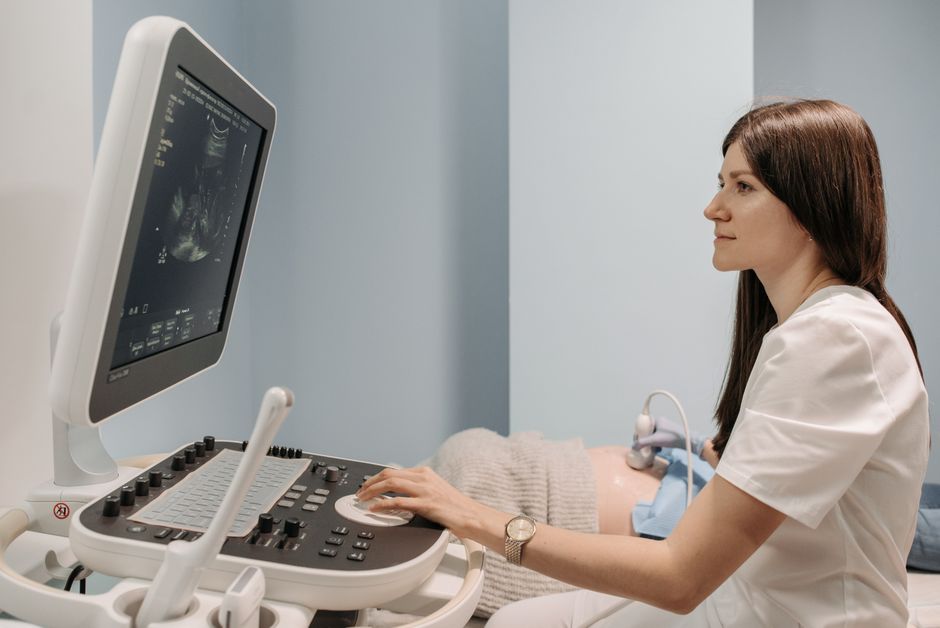
Healthcare in low-to-middle-income countries faces numerous challenges, with one significant issue being the shortage of adequately trained healthcare workers. In the field of antenatal care, fetal ultrasound plays a crucial role in monitoring the health and development of the fetus. However, the lack of skilled sonographers has limited the widespread adoption of this important diagnostic tool in many regions.
A recent study has delved into the use of artificial intelligence to address this gap in under-resourced settings. By collecting blind sweep ultrasounds from both experienced sonographers in the USA and Zambia, as well as novice operators in Zambia, researchers aimed to develop AI models that could accurately predict gestational age and identify fetal malpresentation.
The results of the study are promising. The AI models demonstrated non-inferiority to standard fetal biometry estimates in predicting gestational age, with an error difference of just -1.4 days. Even when blind sweeps were acquired by novice operators performing only two out of the six sweep motion types, the AI model's accuracy remained high.
When it came to detecting fetal malpresentation, the AI model achieved an impressive AUC-ROC of 0.977, indicating its ability to accurately differentiate between cephalic and non-cephalic presentations. Interestingly, both experienced sonographers and novice operators showed similar performance in this aspect, highlighting the potential of AI to standardize and improve diagnostic accuracy across different skill levels.
One of the key advantages of the AI models developed in this study is their ability to run on-device, without the need for internet connectivity. With run-times of less than 3 seconds on Android mobile phones, these diagnostic tools can provide immediate feedback to ultrasound operators, assisting them in improving their capabilities in real-time.
Maternal and perinatal health outcomes in low-to-middle-income countries continue to be a major concern, with high rates of maternal and infant mortality persisting despite advances in healthcare. Fetal ultrasound is a critical component of antenatal care, enabling healthcare providers to monitor fetal growth, detect abnormalities, and intervene when necessary.
By developing an automated system that empowers lightly-trained community healthcare providers to perform ultrasound examinations, this research offers a promising solution to the challenges faced in resource-constrained settings. The combination of a low-cost, battery-powered ultrasound device and a smartphone-based AI system presents a practical and scalable approach to expanding access to ultrasound services.
With the accuracy of the AI models on par with existing clinical standards, there is significant potential for this technology to enhance the quality of antenatal care in low-resource settings. By leveraging artificial intelligence to bridge the gap in sonography training, healthcare providers can deliver better outcomes for mothers and babies, ultimately reducing the burden of maternal and perinatal mortality.