Key Takeaways
- Fetal ultrasound advancements are crucial for monitoring fetal health and development during pregnancy.
- The use of deep learning techniques, such as U-Net++ with ResNet backbone features, enhances fetal ultrasound image segmentation accuracy.
- Explainable AI (XAI) components, like Grad-CAM++, help medical professionals understand and trust the segmentation outputs of AI models.
Advancements in Fetal Ultrasound Technology
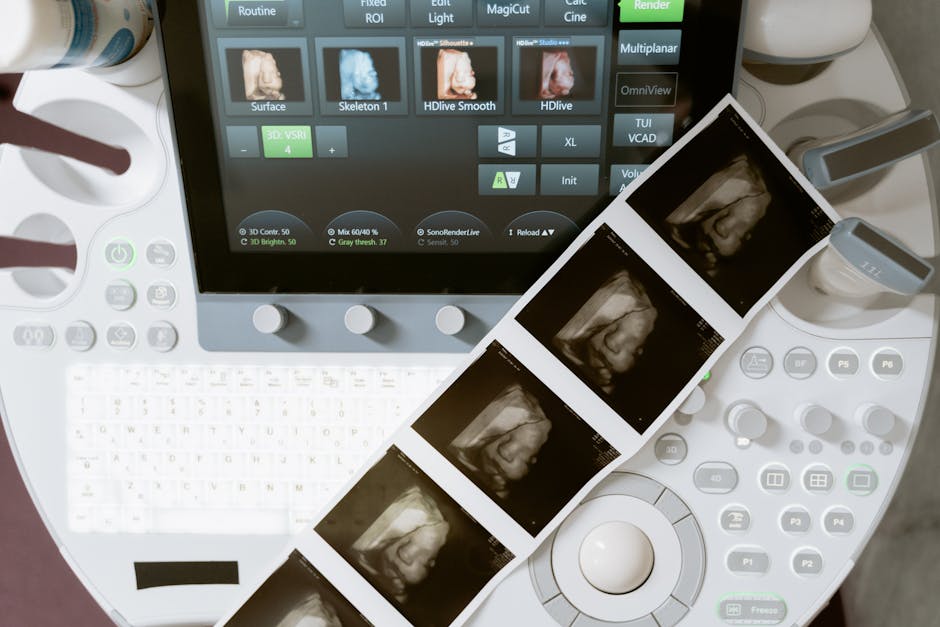
Fetal ultrasound technology has come a long way in recent years, with advancements in deep learning techniques revolutionizing the way we analyze and interpret ultrasound images. These advancements are crucial for monitoring fetal health and development during pregnancy, providing healthcare providers with valuable insights into the well-being of both the fetus and the mother.
Enhancing Image Segmentation Accuracy
One of the key advancements in fetal ultrasound technology is the development of accurate automated techniques for fetal ultrasound image segmentation. By using deep learning models like U-Net++ with ResNet backbone features, researchers have been able to improve segmentation accuracy and reduce the need for time-consuming manual interventions. These models leverage nested skip connections and residual learning to achieve state-of-the-art segmentation results, reaching high Dice coefficients and Intersection over Union values.
Improving Clinical Interpretability with XAI
Explainable AI (XAI) components, such as Grad-CAM++, play a crucial role in enhancing the clinical interpretability of AI models used for fetal ultrasound image segmentation. These components allow medical professionals to understand how the AI model makes decisions and provides clear explanations for its segmentation outputs. By bridging the gap between AI automation and clinical interpretability, XAI components improve the overall reliability and trustworthiness of the segmentation results, making them more suitable for clinical workflows.
Future Implications for Prenatal Healthcare
The integration of deep learning techniques and XAI components in fetal ultrasound technology has significant implications for the future of prenatal healthcare. These advancements enable the development of sophisticated prenatal diagnostic instruments that can enhance healthcare results and improve patient outcomes. By providing healthcare providers with accurate and reliable tools for monitoring fetal health and development, these technologies have the potential to revolutionize the field of prenatal care and improve the overall well-being of both mothers and their babies.